Our European tech retail data
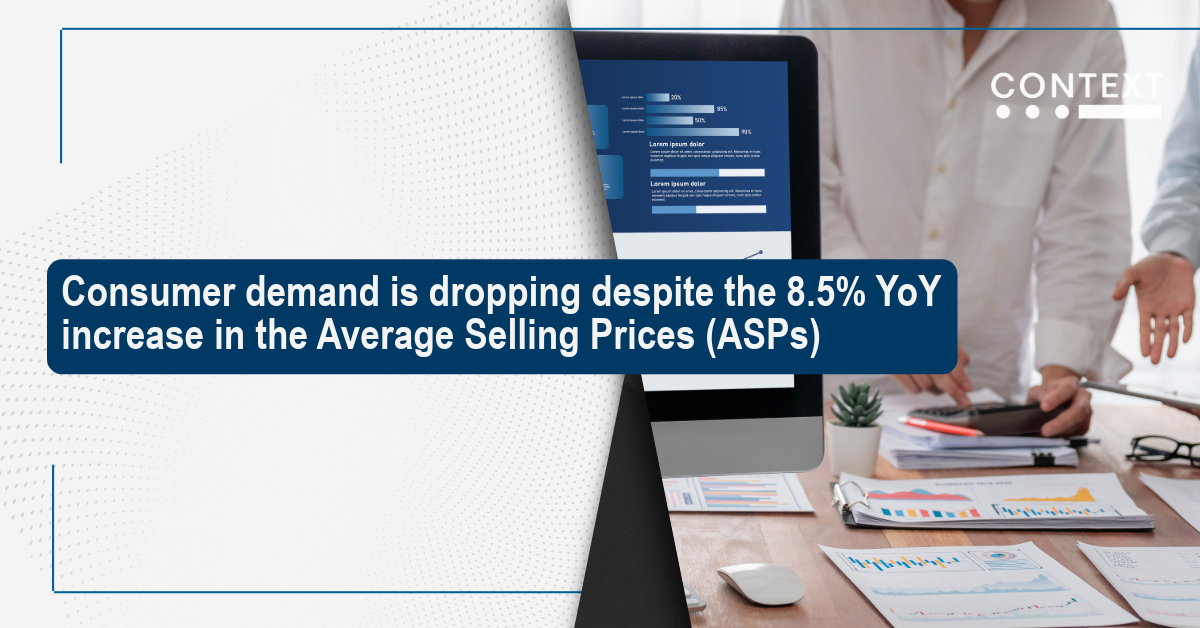
highlighted a divided market in March 2026. Consumer demand is
dropping despite the 8.5% YoY increase in the Average Selling Prices
(ASPs). The driver behind this spike in ASPs is twofold –the finished
products like tablets and smartphones are stagnating in price, while
the cost of SSDs, memory and GPU is soaring.
The Component Crisis
It is the supply-side pressure on
components, and not premium consumer upgrades, that caused the ASP
growth. Hardware costs are rising, putting serious pressure on retail margins:
- SSDs: +41.6% (climbing as high as +68% in
Poland)
- Memory: +33%
- GPUs:
+16.4%
For retailers, the immediate
challenge is securing inventory without crushing the bottom line.
Sinking Consumer Demand
This price hike arrives at the worst
possible moment for consumer engagement. The British Retail Consortium
(BRC) recently reported a 10.7% drop in UK footfall for April.
When people do go out, they are spending on essentials; tech
spending intention has plummeted to -22%.
Between a -13 sentiment score in the
UK and a three-year low in German consumer confidence, the era of
big-ticket tech purchases has clearly hit a pause. When consumers
do spend, they are prioritising essentials over hardware refreshes.
Strategies for Q3
To navigate rising component costs
and cautious shoppers, your tech retail strategy needs three
practical adjustments:
- Localise Your Pricing: Tailor inventory to
regional trends. For example, smartphone prices are down 12% in
France but up 15% in Spain.
- Sell Upgrades, Not
Replacements: Buyers are skipping €1,500 new laptops.
Instead, pitch SSD or memory upgrades as a cost-effective way to
extend the life of their current hardware.
-
Maximise Every Visit: With traffic down, focus on
Conversion Rate Optimisation (CRO) and Average Basket Value
(ABV). Capture the highest possible value from the customers who
are ready to buy.
The remainder of 2026 will favour
retailers who can successfully protect their margins while adapting to
a highly price-sensitive market.
For more data-led
insights into the European retail market, join
the Retail Pulse Newsletter .